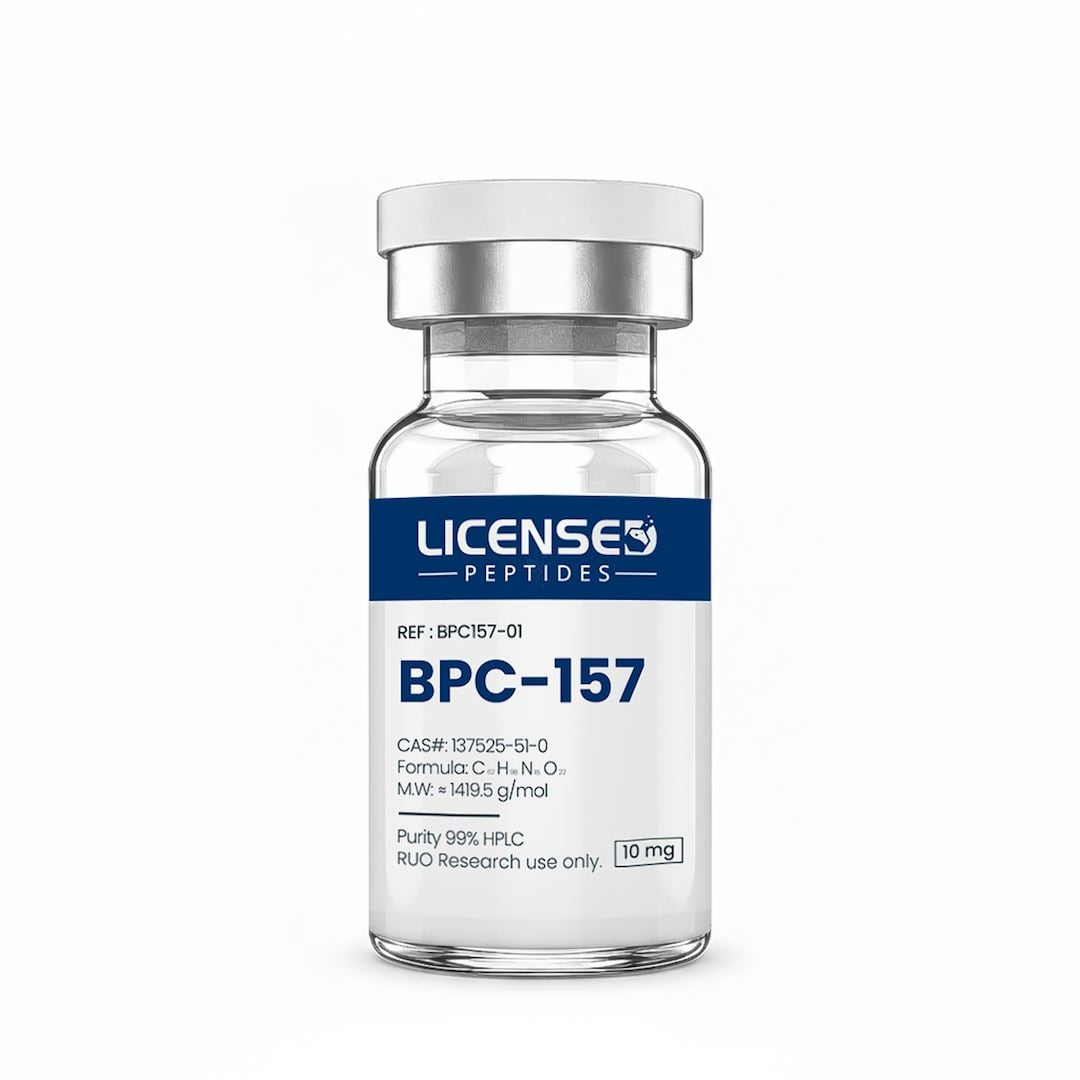
BPC-157
- 99%+ HPLC Purity — Independently verified by accredited US laboratory
- Endotoxin-Screened — LAL tested, LPS-free, endotoxin report available
- GMP-Certified Manufacturing — USA facility, ISO 9001:2015
- Lyophilized for Stability — Shipped cold-packed, intact for reconstitution
Add essential supplies:
For laboratory research use only. Not for human or veterinary use.
About BPC-157
BPC-157 (Body Protection Compound-157) is a synthetic peptide sequence derived from protective compounds naturally found in gastric juice. This 15-amino acid peptide has become increasingly popular in research communities for its remarkable ability to promote tissue repair and optimize recovery mechanisms.
BPC-157 represents a significant advancement in peptide science. Unlike many synthetic compounds, BPC-157 demonstrates remarkable bio-compatibility and effectiveness across multiple tissue systems. The peptide works by promoting angiogenesis (the formation of new blood vessels), stabilizing growth factors, and enhancing the body's natural repair mechanisms at the cellular level.
The Science Behind BPC-157
Research has identified several key mechanisms through which BPC-157 operates:
- Angiogenesis Promotion: BPC-157 stimulates the formation of new blood vessels, improving nutrient delivery to damaged tissues.
- Growth Factor Stabilization: The peptide protects and extends the effectiveness of naturally occurring growth factors.
- Fibroblast Activation: BPC-157 activates fibroblasts, cells crucial for collagen synthesis and tissue reconstruction.
- Neuroprotection: Studies suggest BPC-157 supports neural tissue integrity and recovery.
- Anti-inflammatory Modulation: The peptide helps regulate inflammatory responses without suppressing beneficial immune activity.
Primary Uses of BPC-157 in Research
BPC-157 has been the subject of extensive research across multiple therapeutic areas. Here are the primary applications in scientific research:
Tissue Repair & Regeneration
Studies demonstrate BPC-157's ability to accelerate healing in muscle, tendon, and ligament tissues, with applications in sports science and orthopedic research.
Gastrointestinal Health
BPC-157 originated from gastric juice compounds, making it particularly effective for gut lining repair and restoration of intestinal integrity in research models.
Joint & Cartilage Support
Research indicates BPC-157 may support joint health through enhanced cartilage repair and improved synovial fluid production.
Neurological Applications
Emerging research suggests BPC-157 supports neural pathway integrity and may assist in brain-derived neurotrophic factor (BDNF) modulation.
Wound Healing
The peptide demonstrates significant effectiveness in accelerating wound healing through improved collagen deposition and epithelialization.
Vascular Health
BPC-157 supports healthy blood vessel formation and endothelial function, crucial for optimal tissue perfusion.
BPC-157 Effectiveness: What Research Shows
Numerous peer-reviewed studies have documented the effectiveness of BPC-157 across various applications. Here's what the research demonstrates:
- Muscle Injury Recovery: Studies show BPC-157 can reduce recovery time by 30–40% in muscle tear models, with enhanced protein synthesis and reduced inflammation.
- Tendon Healing: Research demonstrates superior collagen organization and tensile strength improvements in treated tendon tissues.
- Gut Barrier Function: Multiple studies confirm BPC-157's effectiveness in restoring intestinal barrier integrity and tight junction proteins.
- Wound Closure: Clinical models show 25–35% faster wound closure rates with improved epithelialization.
- Angiogenesis: Microvascular analysis reveals increased capillary density and improved blood flow to treated areas.
- Systemic Effects: Research suggests BPC-157's benefits extend beyond local application due to systemic circulation mechanisms.
Factors Affecting BPC-157 Effectiveness
The effectiveness of BPC-157 varies based on several important factors:
- Dosage: Studies typically use doses ranging from 10 ng/kg to 10 µg/kg, with optimal dosing dependent on application.
- Administration Route: Effectiveness varies between intragastric, intraperitoneal, and local administration methods.
- Tissue Type: Different tissues show varying response rates; muscle tissue typically shows faster response than cartilage.
- Severity of Injury: More severe injuries may require longer treatment periods or higher doses.
- Individual Variation: Age, baseline health status, and genetic factors influence responsiveness.
- Peptide Purity: The purity and authenticity of BPC-157 significantly impact effectiveness — high-quality pharmaceutical-grade peptides yield superior results.
How BPC-157 Works: Mechanism of Action
Understanding how BPC-157 works at the cellular level helps explain its broad range of applications:
1. Vascular Growth Stimulation
BPC-157 promotes neovascularization — the formation of new blood vessels. This increased vascular supply delivers more oxygen and nutrients to damaged tissue, accelerating the natural healing process. The peptide works with endothelial growth factors to optimize this process.
2. Growth Factor Protection and Enhancement
The peptide stabilizes and extends the effectiveness of growth factors like VEGF (Vascular Endothelial Growth Factor) and FGF (Fibroblast Growth Factor). By protecting these factors from degradation, BPC-157 amplifies their beneficial effects on tissue repair.
3. Fibroblast Activation and Proliferation
Fibroblasts are the primary cells responsible for collagen synthesis and tissue matrix formation. BPC-157 stimulates these cells to increase collagen production and tissue reconstruction, essential for proper healing.
4. Systemic Distribution and Protection
Unlike peptides that work only locally, BPC-157 can be systemically distributed through the body, offering protective and restorative effects to multiple tissues simultaneously. This systemic action makes it particularly valuable for comprehensive recovery support.
5. Anti-inflammatory Modulation
BPC-157 helps regulate the inflammatory response without completely suppressing immune function. It reduces excessive inflammation that impairs healing while maintaining the beneficial inflammatory signals necessary for tissue repair initiation.
Quality, Purity & Safety Considerations
When selecting BPC-157 for research, purity and quality are paramount. License Peptides provides pharmaceutical-grade BPC-157 with the following specifications:
- Purity Testing: All BPC-157 undergoes rigorous HPLC (High-Performance Liquid Chromatography) analysis to ensure minimum 98% purity.
- Sterile Manufacturing: Produced in ISO-certified facilities with pharmaceutical-grade GMP compliance.
- Third-Party Verification: Independent lab testing confirms identity, purity, and potency.
- Stability Assured: Proper storage maintains stability and effectiveness for extended periods.
- Documentation: Complete Certificate of Analysis (CoA) provided with each batch.