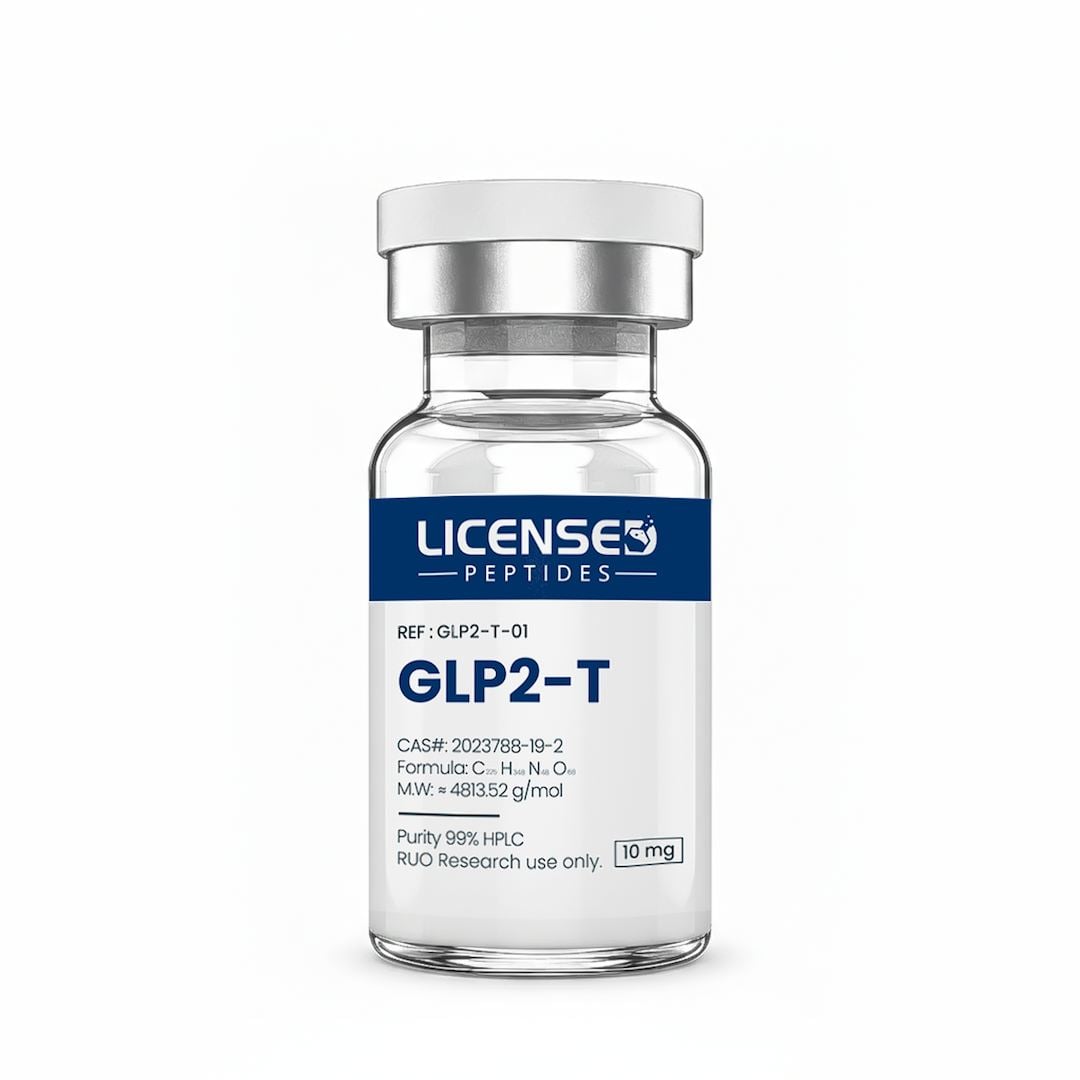
GLP2-T
- 99%+ HPLC Purity — Independently verified by accredited US laboratory
- Endotoxin-Screened — LAL tested, LPS-free, endotoxin report available
- GMP-Certified Manufacturing — USA facility, ISO 9001:2015
- Lyophilized for Stability — Shipped cold-packed, intact for reconstitution
Add essential supplies:
For laboratory research use only. Not for human or veterinary use.
About GLP2-T
GLP2-T is an advanced dual-incretin research peptide developed for scientific investigation into receptor signaling, peptide stability, metabolic pathways, and endocrine-gut axis interactions. This high-purity research compound is commonly utilized in laboratory settings to study receptor crosstalk, downstream signaling dynamics, gastrointestinal physiology, and complex biochemical systems. Manufactured to rigorous research-grade standards, GLP2-T is supplied as a lyophilized powder and is intended strictly for laboratory research and educational purposes.
GLP2-T is a research peptide designed to support scientific studies involving dual-incretin receptor activity, peptide-receptor interactions, and experimental metabolic signaling pathways. Research suggests that its molecular design may provide enhanced stability, receptor selectivity, and reproducibility, making it valuable for controlled laboratory investigations.
In research environments, GLP2-T is being studied for its role in receptor binding, signal transduction, gastrointestinal physiology, endocrine communication, and peptide structure analysis. Scientists continue to explore its potential applications in understanding complex biological signaling networks and experimental pathway responses.
Key Highlights
- High-purity GLP2-T peptide
- Research-grade peptide for laboratory use
- Dual-incretin research peptide
- Lyophilized peptide powder
- Endotoxin-tested peptide
- LPS-free peptide
- HPLC-tested purity
- GMP-manufactured research compound
- Enhanced peptide stability
- Suitable for receptor signaling research
- Supports peptide structure analysis
- Designed for metabolic pathway studies
- Batch-to-batch reproducibility
- Trusted quality standards from Licensed Peptides
- Manufactured for scientific and educational research applications only
Potential Benefits
Research suggests GLP2-T may support scientific investigation into:
- Receptor signaling pathways
- Dual-incretin receptor activity
- Peptide-receptor interactions
- Endocrine-gut axis communication
- Metabolic signaling networks
- Signal transduction mechanisms
- Gastrointestinal physiology research
- Peptide stability studies
- Experimental endocrinology
- Biochemical pathway modeling
- Assay development and validation
- Long-term laboratory research protocols
- Nutrient-hormone signaling coordination
How GLP2-T Works
GLP2-T is being studied for its ability to interact with dual-incretin signaling pathways involved in metabolic communication and receptor activation. Research indicates that the peptide may support investigations into receptor binding, signal transduction, gastrointestinal function, and downstream cellular responses.
Its engineered structure is designed to provide improved resistance to enzymatic degradation and enhanced stability compared to naturally occurring peptide systems. These characteristics make GLP2-T particularly valuable for controlled laboratory studies requiring consistent receptor engagement and extended observation periods.
Suggested Research Use / Usage Notes
GLP2-T is commonly studied in research involving:
- Receptor signaling research
- Peptide structure analysis
- Experimental endocrinology
- Metabolic pathway investigations
- Gastrointestinal physiology studies
- Peptide stability research
- Signal transduction studies
- Assay development
- Endocrine-gut axis research
- Molecular biology applications
- Biochemical pathway modeling
- Cellular signaling pathway studies
Storage Instructions
Lyophilized GLP2-T Storage
Store unopened lyophilized vials at -20°C for long-term stability. Protect from heat, moisture, and direct light exposure. Keep vials sealed until laboratory use. Avoid unnecessary temperature fluctuations.
After Reconstitution
Store refrigerated between 2°C and 8°C. Follow established laboratory protocols. Avoid repeated freeze-thaw cycles. Use proper aseptic handling techniques during research procedures.
Why Researchers Choose Licensed Peptides
Licensed Peptides focuses on providing premium research peptides manufactured under strict quality standards. Research products are developed using advanced synthesis and purification methods, with emphasis on purity, consistency, stability, and reproducibility. Quality-control processes may include HPLC testing, endotoxin screening, analytical verification, and GMP-based manufacturing procedures to support reliable laboratory research outcomes.