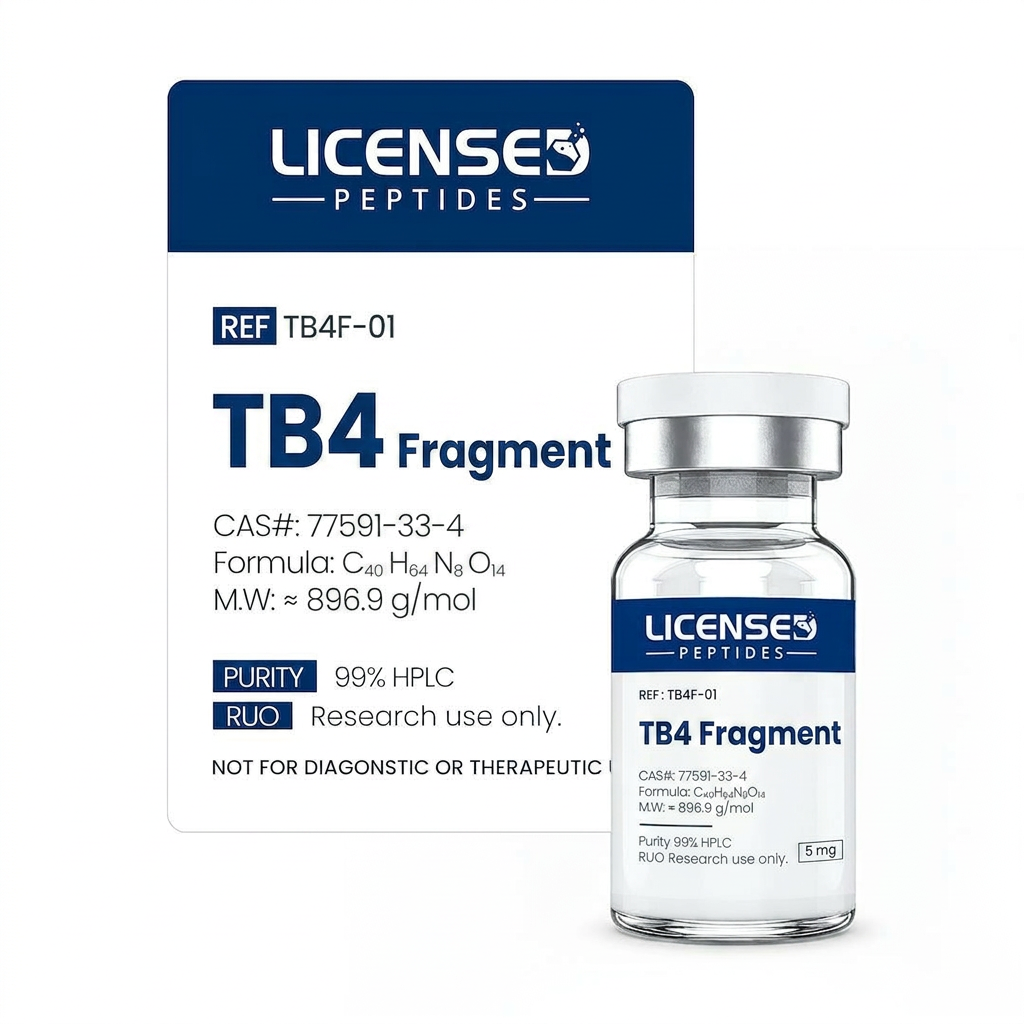
TB4-FRAG (Ac-SDKP)
- 99%+ HPLC Purity — Independently verified by accredited US laboratory
- Endotoxin-Screened — LAL tested, LPS-free, endotoxin report available
- GMP-Certified Manufacturing — USA facility, ISO 9001:2015
- Lyophilized for Stability — Shipped cold-packed, intact for reconstitution
Add essential supplies:
For laboratory research use only. Not for human or veterinary use.
About TB4-FRAG (Ac-SDKP)
TB4-FRAG, also known as Ac-SDKP (N-Acetyl-Seryl-Aspartyl-Lysyl-Proline), is a naturally occurring tetrapeptide derived from Thymosin Beta-4. Researchers study Ac-SDKP for its involvement in cellular signaling pathways, extracellular matrix regulation, angiogenesis mechanisms, tissue remodeling research, and regenerative biology investigations.
Due to its connection with Thymosin Beta-4 metabolism and cellular communication pathways, TB4-FRAG has become an increasingly important compound in modern peptide and molecular biology research.
Key Highlights
- High-Purity TB4-FRAG (Ac-SDKP)
- N-Acetyl-Seryl-Aspartyl-Lysyl-Proline
- Thymosin Beta-4 Fragment
- Research-Grade Quality
- 99%+ HPLC Tested Purity
- Third-Party Laboratory Tested
- Endotoxin Screened
- LPS-Free Standards
- Lyophilized Peptide Format
- Cellular Signaling Research
- Angiogenesis Research Applications
- Tissue Remodeling Studies
- Molecular Biology Investigations
- Premium Quality from Licensed Peptides
What Is TB4-FRAG (Ac-SDKP)?
TB4-FRAG (Ac-SDKP) is a naturally occurring tetrapeptide generated through enzymatic cleavage of Thymosin Beta-4. Research suggests Ac-SDKP participates in multiple biological signaling pathways involving cellular communication, matrix regulation, angiogenic signaling, and tissue remodeling processes.
Scientists frequently investigate Ac-SDKP because of its unique role in molecular signaling networks and its relationship to cellular adaptation mechanisms. As one of the most studied Thymosin Beta-4 metabolites, TB4-FRAG continues to attract interest across regenerative biology and cellular research fields.
Potential Benefits in Research
Research suggests TB4-FRAG (Ac-SDKP) may support scientific investigation into:
Cellular Signaling Research
Cellular communication pathways, signal transduction mechanisms, peptide signaling networks, and molecular pathway analysis.
Tissue Remodeling Research
Extracellular matrix regulation, cellular adaptation mechanisms, matrix signaling pathways, and structural biology investigations.
Angiogenesis Research
Vascular signaling pathways, endothelial cell communication, cellular growth signaling, and biological pathway mapping.
Advanced Molecular Research
Regenerative biology studies, cellular response mechanisms, molecular biology investigations, peptide-receptor interactions, and biochemical signaling analysis.
How TB4-FRAG (Ac-SDKP) Works
Research indicates that Ac-SDKP functions as a bioactive signaling peptide involved in cellular communication and regulatory pathways. Scientists study TB4-FRAG because of its relationship to Thymosin Beta-4 metabolism and its involvement in molecular signaling mechanisms associated with tissue biology and extracellular matrix interactions.
Its small molecular structure and naturally occurring biological origin make it valuable for advanced investigations into peptide signaling and cellular regulation.
Research Applications
- Cellular signaling research
- Regenerative biology investigations
- Angiogenesis pathway studies
- Molecular biology research
- Extracellular matrix analysis
- Tissue remodeling research
- Signal transduction studies
- Cellular communication investigations
- Peptide signaling pathways
- Biochemical pathway mapping
- Experimental biology research
- Advanced peptide studies
Product Quality Standards
Licensed Peptides TB4-FRAG (Ac-SDKP) is manufactured according to rigorous research-grade standards:
- 99%+ HPLC Purity Verification
- Third-Party Laboratory Analysis
- Mass Spectrometry Confirmation
- Endotoxin Screening
- LPS-Free Verification
- GMP Manufacturing Standards
- Batch Traceability
- Quality-Control Documentation
Storage Instructions
Lyophilized Storage
Store in a cool, dry environment. Protect from heat, moisture, and direct sunlight. Maintain recommended laboratory storage conditions.
After Reconstitution
Store refrigerated according to laboratory guidelines. Avoid repeated freeze-thaw cycles. Follow sterile laboratory handling procedures. Use according to established research protocols.
Why Choose Licensed Peptides?
Licensed Peptides focuses on supplying premium research peptides manufactured according to strict quality-control standards. Every batch is produced with emphasis on research-grade purity, HPLC-tested quality, third-party laboratory verification, endotoxin-free standards, reliable batch consistency, advanced peptide manufacturing, professional research support, and premium scientific materials. Researchers trust Licensed Peptides for dependable quality and advanced research compounds.