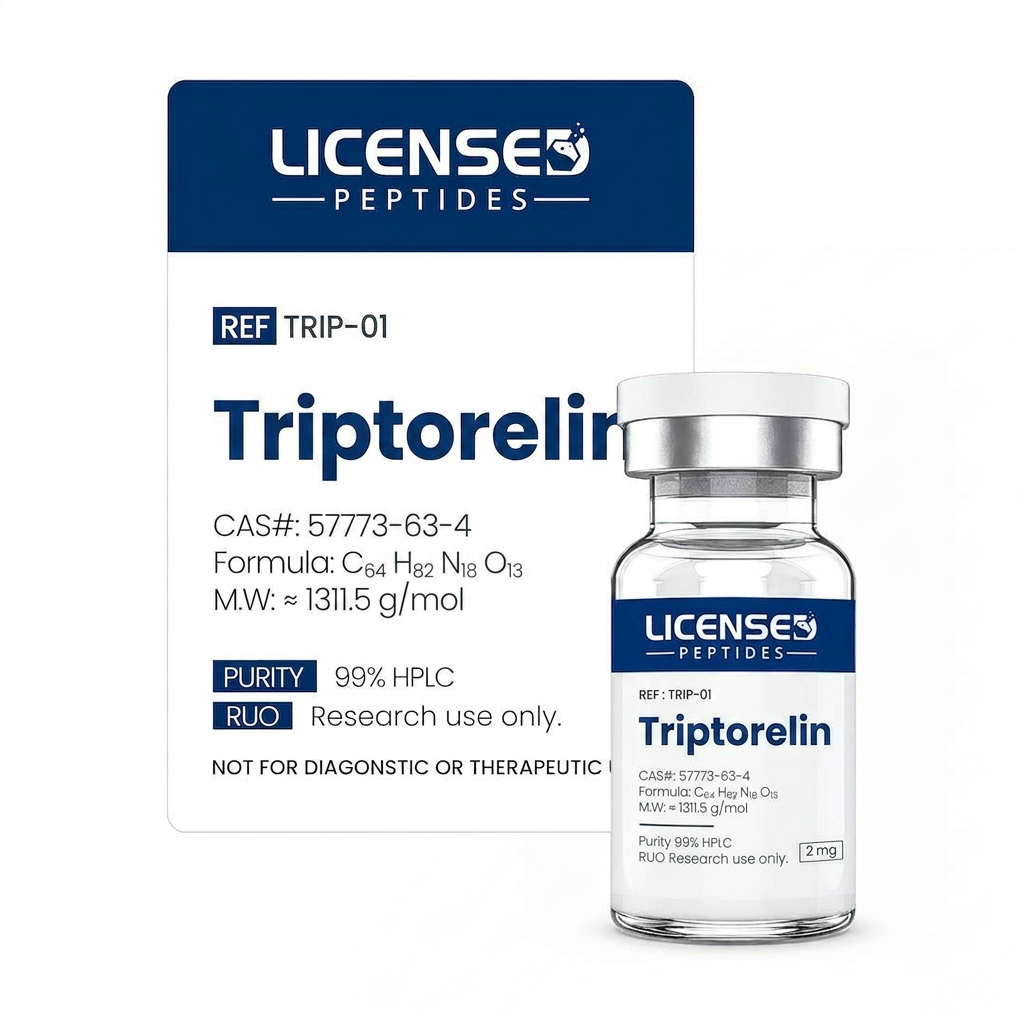
Triptorelin
- 99%+ HPLC Purity — Independently verified by accredited US laboratory
- Endotoxin-Screened — LAL tested, LPS-free, endotoxin report available
- GMP-Certified Manufacturing — USA facility, ISO 9001:2015
- Lyophilized for Stability — Shipped cold-packed, intact for reconstitution
Add essential supplies:
For laboratory research use only. Not for human or veterinary use.
About Triptorelin
Triptorelin is a synthetic decapeptide analog of gonadotropin-releasing hormone (GnRH) designed to activate GnRH receptors with significantly greater potency and stability than endogenous GnRH. Researchers study Triptorelin for its role in hypothalamic-pituitary-gonadal (HPG) axis signaling, reproductive endocrinology, hormone regulation pathways, pituitary signaling mechanisms, and neuroendocrine communication. Research identifies Triptorelin as one of the most extensively investigated GnRH receptor agonists in modern peptide science.
Key Highlights
- High-Purity Triptorelin Peptide
- Research-Grade GnRH Agonist
- Gonadotropin-Releasing Hormone Analog
- 99%+ HPLC Tested Purity
- Third-Party Laboratory Verified
- Endotoxin Tested
- LPS-Free Standards
- Lyophilized Peptide Format
- GnRH Receptor Research
- HPG Axis Research Applications
- LH & FSH Signaling Studies
- Endocrine Pathway Research
- Neuroendocrine Signaling Investigations
- Premium Quality from Licensed Peptides
What Is Triptorelin?
Triptorelin is a synthetic GnRH (Gonadotropin-Releasing Hormone) agonist composed of ten amino acids. It was developed through modification of native GnRH, incorporating a D-Tryptophan substitution that increases receptor affinity, biological activity, and metabolic stability. Research suggests Triptorelin functions through potent activation of GnRH receptors located within the anterior pituitary gland.
Scientists frequently utilize Triptorelin as a research tool for investigating:
- GnRH receptor signaling
- HPG axis regulation
- LH and FSH secretion pathways
- Endocrine feedback mechanisms
- Reproductive hormone communication
- Neuroendocrine biology
Potential Benefits in Research
Research suggests Triptorelin may support scientific investigations involving:
GnRH Receptor Research
GnRH receptor activation, receptor-binding dynamics, signal transduction pathways, and hormone receptor biology.
Endocrine Research
HPG axis regulation, hormonal communication networks, endocrine feedback mechanisms, and pituitary signaling studies.
Reproductive Biology Research
LH secretion pathways, FSH regulation mechanisms, gonadotropin signaling, and reproductive endocrinology.
Advanced Molecular Research
Neuroendocrine signaling, hormone cascade investigations, cellular communication pathways, and molecular endocrinology research.
How Triptorelin Works
Research indicates that Triptorelin binds to GnRH receptors located on pituitary gonadotroph cells. Activation of these receptors initiates intracellular signaling pathways responsible for regulating luteinizing hormone (LH) and follicle-stimulating hormone (FSH) secretion. Scientists study Triptorelin because of its ability to provide insight into endocrine communication networks, reproductive hormone regulation, and neuroendocrine signaling mechanisms.
Its enhanced receptor affinity and stability make Triptorelin particularly valuable for laboratory models investigating hormone signaling and endocrine pathway regulation.
Research Applications
- GnRH receptor research
- HPG axis investigations
- Reproductive endocrinology
- LH signaling studies
- FSH pathway analysis
- Hormone regulation research
- Neuroendocrine biology
- Pituitary signaling investigations
- Molecular endocrinology
- Cellular communication studies
- Signal transduction research
- Advanced peptide research
Product Quality Standards
Licensed Peptides Triptorelin is manufactured according to rigorous research-grade standards:
- 99%+ HPLC Purity Verification
- Third-Party Laboratory Testing
- Mass Spectrometry Analysis
- Endotoxin Screening
- LPS-Free Verification
- GMP Manufacturing Standards
- Batch Traceability
- Quality-Control Documentation
Storage Instructions
Lyophilized Storage
Store in a cool, dry environment. Protect from heat, moisture, and direct sunlight. Maintain recommended laboratory storage conditions.
After Reconstitution
Store refrigerated according to laboratory guidelines. Avoid repeated freeze-thaw cycles. Follow sterile handling procedures. Utilize established research protocols.
Why Choose Licensed Peptides?
Licensed Peptides focuses on supplying premium research peptides manufactured according to strict quality-control standards. Every batch is produced with emphasis on research-grade purity, HPLC-tested quality, third-party laboratory verification, endotoxin-free standards, reliable batch consistency, advanced peptide manufacturing, professional research support, and premium scientific materials. Researchers trust Licensed Peptides for dependable quality and advanced research compounds.